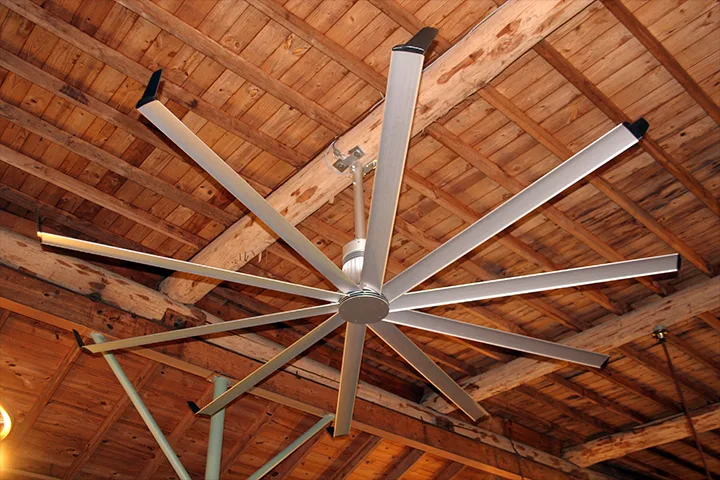
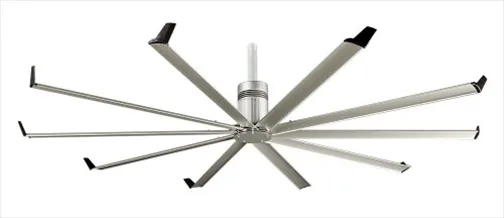
"While doing designs for the Paninis Bar & Grill Restaurant in Kent, Ohio, the client called to talked about this -"big ass fan" that should be included in the plan. I thought he was just being descriptive in his assessment, but no, Big Ass Fan was the name of the product and the company that made it. A family-owned business in Kentucky, Big Ass Fan is the largest manufacturer of "the world's best-selling big fan", one of their fans marketed as "the biggest, baddest, and toughest big fan on the planet." Seriously, they sound like the Wrestlemania of fans. Nothing wrong with that; I love their spunk.
With spans of 12-feet to 20-feet (or more on special orders), Big Ass Fans make a design statement, and, their slow moving rotation blades provide cooling power by their sheer size. Our client wanted the 20-footer, but we could only accomnodate an 18-footer. When the fan arrived, it was all excitement at the construction -men with big toys, as the shipping box was opened revealing a disassembled fan with the motor on one side, and the blades wrapped separately. The General Contractor took the installation instructions, and I forgot about it -not my department.
A few days later, with the excitement of first love extinguished, the client called me to share his fears that the fan was not "wow" enough, so how about adding art to the blades. We went back and forth on some ideas -like his suggestions of going to a sports store and buying bumper stickers and team logos to paste on the blades. Sometimes I feel insulted by such suggestions; I don't do "plop art" or "plop crap". We ended up the conversation with: -"I'll think of something". Then I gave the business some thought.
The fan had ten blades, so I needed ten designs. The designs had to be about sports (this was a sports bar), so I decided to assign each blade a team. I got another call from the client suggesting we add area high schools, I concurred this was a great idea (good for community relations) and added this to my list. With each blade having a designated role, I moved on to the next step: doing the research. This is what I needed: team colors, logos, mascots, and their history (since all the things mentioned, change over time.) So, for those of you who have similar projects or perhaps a Big Ass Fan to do, here's how I do it.
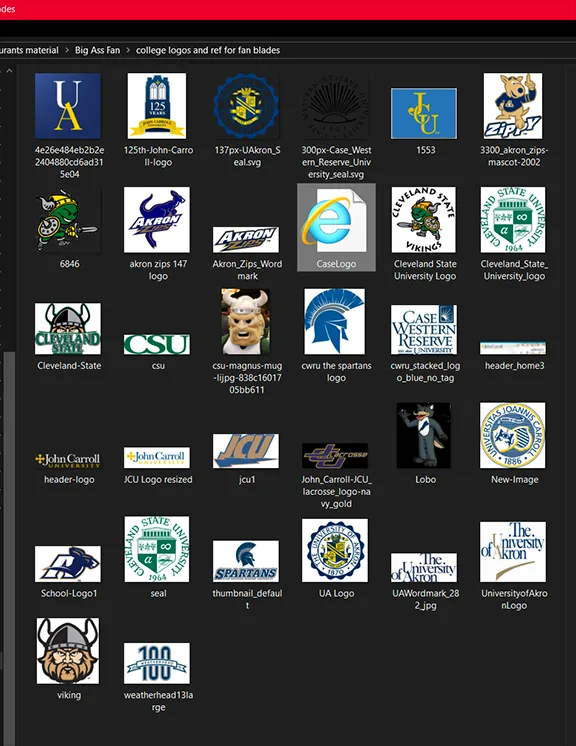
Begin your research by doing a Google Image search. You can find almost everything here, and other things you didn't think about at the time. However, the resolution of the images you will find (72px per inch), is not good enough for commercial printing, which requires a minimum resolution of 300 dpi. So note: low resolution = low image quality. Sometimes you can find images of extraordinary large size. This is good, because you can decrease the size of the image and increase the resolution without affecting quality. But this does not always happen. But anyway, for now, just copy and save anything that's useful into a file. Notice my file shown in one of these images.
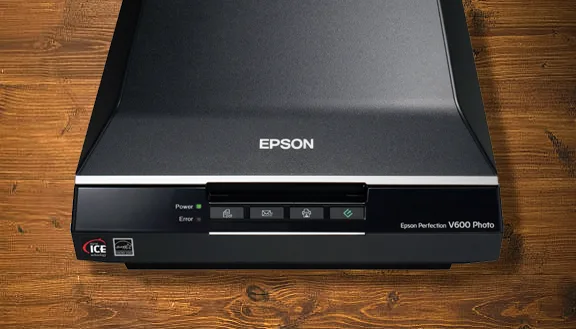
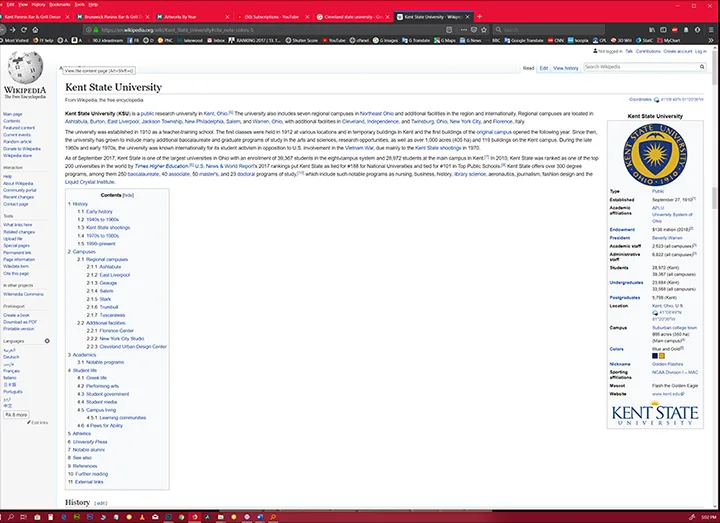
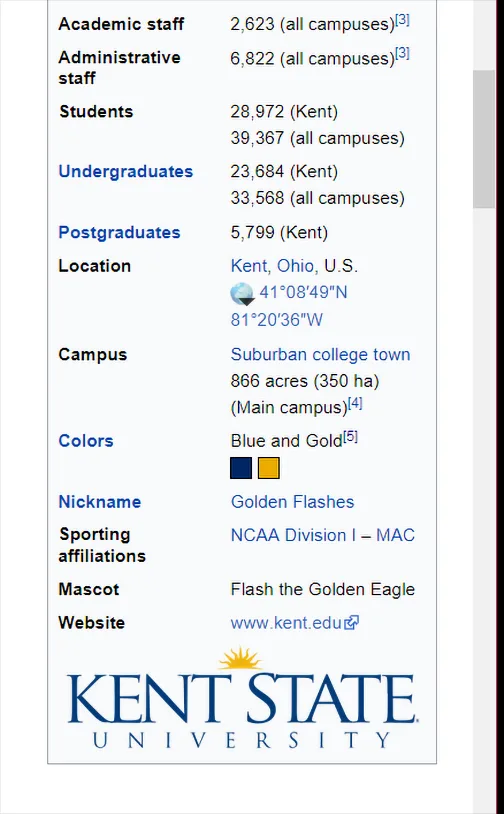
Sometimes I also scan images from books and magazines on my Epson V600 Photo Scanner. You can also scan your own lettering or line drawings to upload for coloring and manipulation in Photoshop. Just make sure you set the scanner to save the image on High Resolution. Next, I do a Wikipedia search of every team. Here you will all you need to know about a particular team, including the exact team colors, copies of all their logos through the years to the present, the team nicknames and mascots. On the right side of the team's Wikipedia page, all these facts will be summarized on a box.
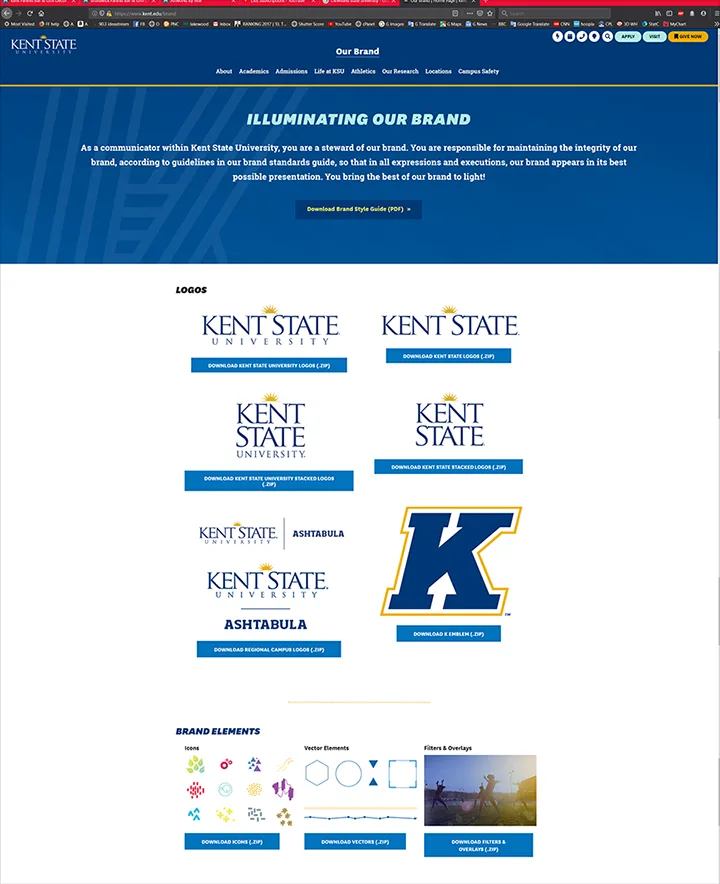
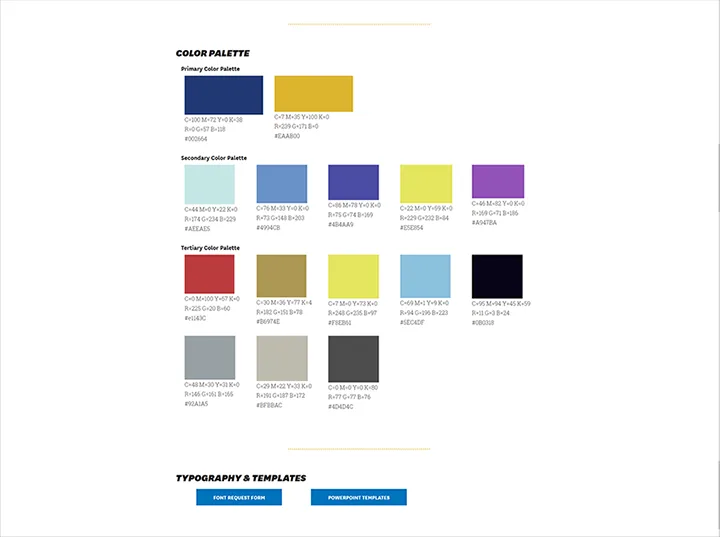
Within the box, usually by the team colors, you will find a reference number. If you press it, it will take you to that specific reference listed below, or you could scroll down on the page and find the numbered reference on your own. The refence is an active link that will take you to the college page dealing specifically with the school's "Brand". This is the collection of all the specifications for using the school's logos, names, text and other variations, and the color palette you must use when reproducing their brand. From this page, you download into your computer all the data that you need.
The next step is where all the heavy work is done. In Photoshop, open each logo from your file, and re-size the image to the desire size and resolution. Most likely the resulting image-quality is very poor, but that's okay, since this image will only be your template to create a new one. Open a new layer and trace the logo from the first image unto your new layer, and add text that matches the former. In other words, you are creating a new copy of the logo as the desire specifications. Once you have completed all the art, your are ready for cut and paste. On a new file, create a canvas of the same scaled size as the actual blade at a resolution of 300 dpi. Next, you do the required graphics work (banding, colors, etc), import the new art (logos and so on) and then make necessary editing adjustments.
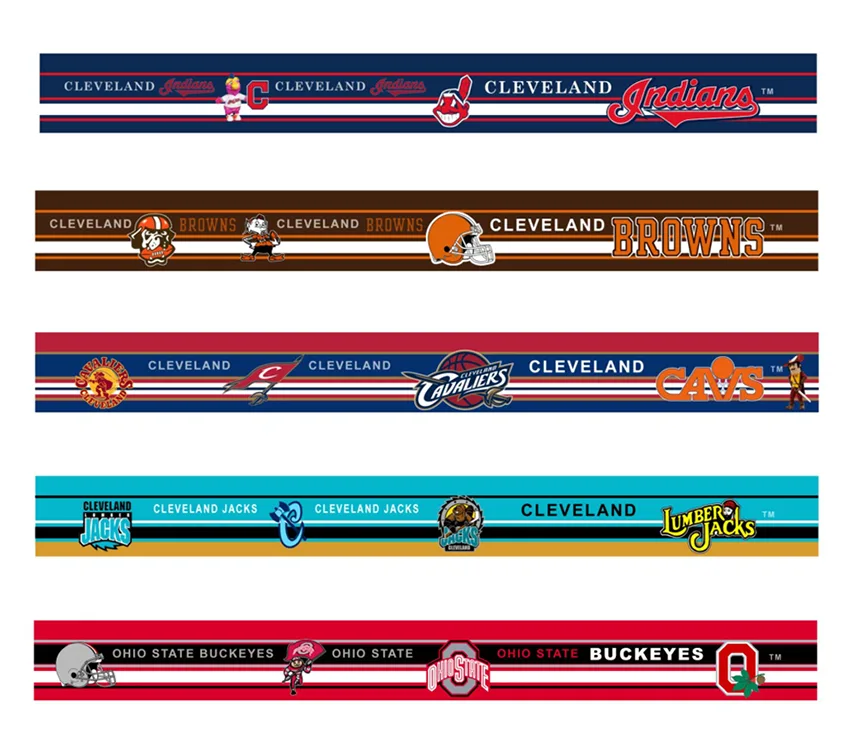
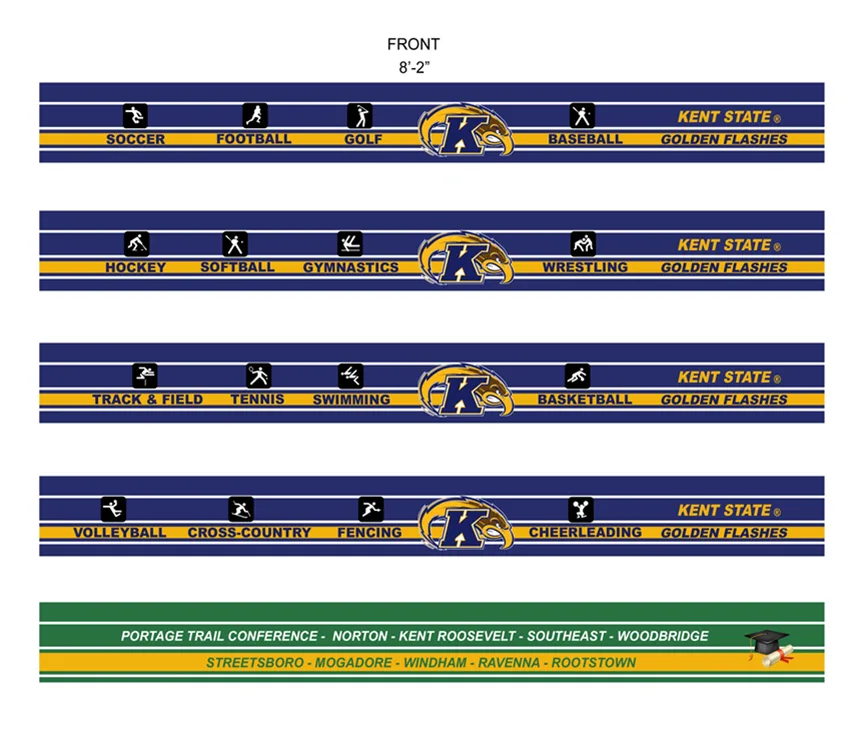
The colors for each blade is determined by the team colors used on that blade. For example: the Cleveland Indians colors are red, blue and white, so these will be the colors for their assigned blade. The same goes for all the rest. Considering that all the blades were of different colors, I designs bands (stripes running along the blade) as a common feature on all blades. Then, considering each blade was over eight-feet long (that's a lot of real-estate) I added all the logos each team had over time, and use repetition of names to link them visually. Since for this job, Kent State was to be the highlighted school, I did four blades with the same logo and banding, but added every varsity sports and simple black and white icons to represent them. Where did the icons come from? For a Google Image search. Naturallyy, they were not good for a cut and paste, so I did new reproductions of each (and may prove useful for another job).
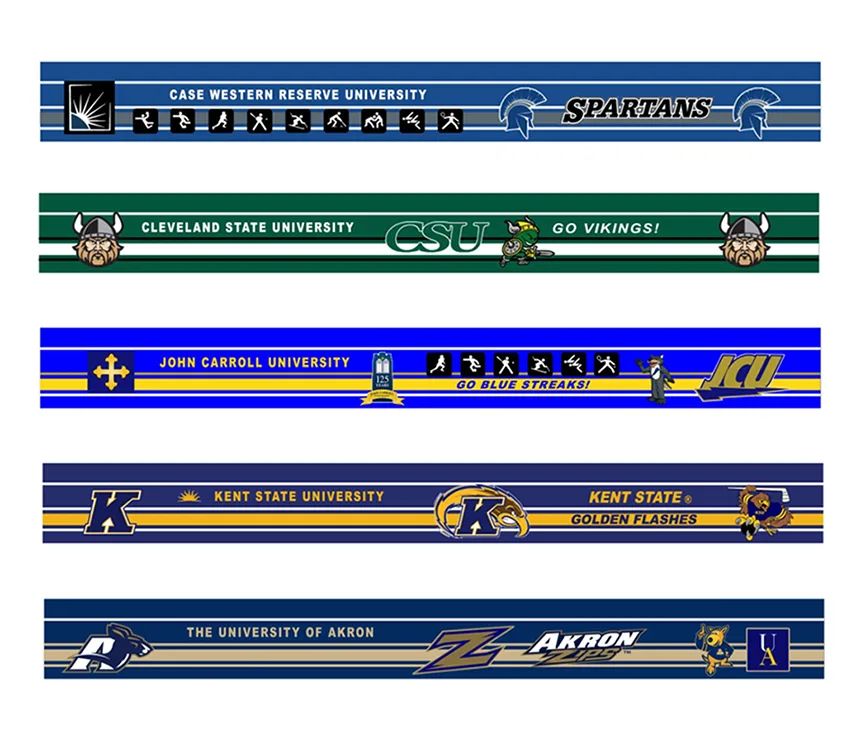
After finishing all the art and saving it into a file, I copy the large file to "DropBox" for the printer to download. Then I asked my printer friend to print them on vinyl and also to attach "wrap" the vinyl on the fan blades. The finished fan looked trully like a work of art, slowly spinning in a rainbow of colors. And when the fan was off, people could enjoy the art on the blades. Month later, I was ask to do the same for another Big Ass Fan at brewery next to Case Western Reserve University. I created art for five new blades to replace the Kent State University designs and the one for the Kent schools -but still represented Kent State on one of the new blade designs. This time around, the Big Ass Fan was of a smaller size, so I made adjustments to the files accordingly. Them my friend the printer took care of the rest.
Now you know everything there is to know about adding graphics to a Big Ass Fan. But the process can be adapted to a number of situations. The key is to be well prepared by having all the needed art done in advance, so the composing becomes simply a matter of cut-and-paste. I save copies of all the created art for future use. When you do sports bars, the same images are used time and time again. One question that always come up is why not use Adobe Illustrator to create these graphic files. My answer is that Adobe Illustrator is perfectly fine (and practically recommended) since you end up with Vector files which do not decay as you change the size of an image. My answer is that I'm extremely comfortable with Photoshop (and not too familiar with Adobe Illustrator) but can get away with Raster files for my design needs (I just do larger files for printing). What's important to me is the finished result. But you do what works best for you.
Thank you art lovers for visiting Muralmaster. I leave you with a parting gift, a quote from American writer Dale Carnegie:
"Instead of worrying about what people say of you, why not spend time trying to accomplish something they will admire?"
About Muralmaster.org
Muralmaster® is ‘an educational site’ privately sponsored and maintained. It contains no pop-ups, sales banners or advertisements. People from over thirty countries routinely visit Muralmaster to enjoy the articles and admire the art. This website is also a great learning tool for artists and young students wanting to know more about the inner workings of this artistic profession. In Muralmaster they get what they can’t get elsewhere: an intimate and sobering look into the struggles of an artistic mind and the difficult career-realities of being an artist.