
Background Details
A food truck is a vehicle equipped to sell or to cook and sell food. They come in a variety of sizes, shapes and forms. Some, sell frozen or prepackaged food; others have on-board kitchens and prepare food from scratch. Sandwiches, hamburgers, french fries, ice-cream and other regional fast food fare is common. In recent years, associated with the pop-up restaurant phenomenon, food trucks offering gourmet cuisine and a variety of specialties and ethnic menus, have become particularly popular.
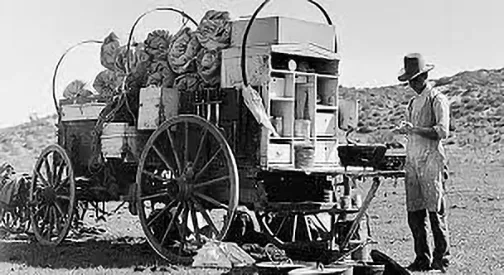
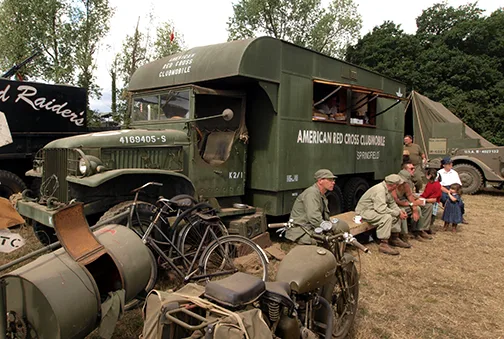
In the United States, the Texas "chuckwagon" is a precursor to the American food truck. In the later 1800s, herding cattle from the Southwest to markets in the North and East kept cowhands on the trail for months at a time. Later versions of the food truck were mobile canteens, which were created in the late 1950s. These mobile canteens were even authorized by the U.S. Army and operated on stateside army bases.
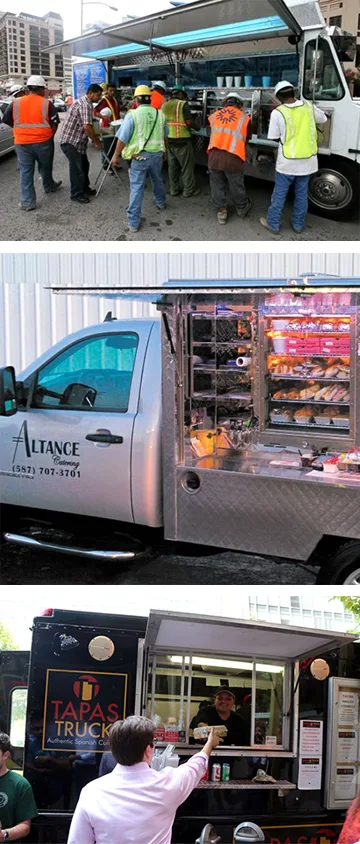
Mobile food trucks have been around for years, serving construction sites, factories, and other blue-collar locations. In big cities of the U.S. the food truck traditionally provided a means for the on-the-go person to grab a quick bite at a low cost. Food trucks were not only sought out for their affordability but also because the provided ethnic dishes to an increasingly diverse society.
In recent years, the food truck resurgence was fueled by a combination of factors following periods of economic recession. Changes in consumer tastes and technological factors combined to make street food "hip" or "chic". There was an increase in the number of food trucks in the United States. While the construction business was drying up, leading to a surplus of available food trucks, chefs from high-end restaurants were being laid off. For experienced cooks suddenly without work, the food truck seemed a clear choice, so old trucks passed hands and were refurbished to the latest trends.
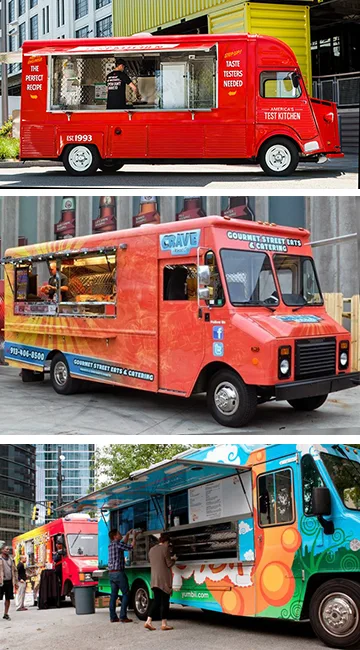
Once mostly a commonplace in American coastal big cities like New York and LA, gourmet food trucks are now a common site in the suburbs as well, and in small towns across the country. Food trucks are also being hired for special events, like weddings, movie shoots, and corporate gatherings, and also to carry advertising promoting companies and brands. And along with the resurgence of the food trucks, there has also been an increased need for artists that can decorate them. Here's where I come in.
2013 - Gourmet Soul Food Truck
A hot summer afternoon found me working outdoors on the corner of West 25th and Clark Avenue, atop a scaffold, working on the mural "It's up to us". Everyday we have plenty of onlookers curious and fascinated with the craft of painting. On this particular day a lady came to me and asked if I could do a design for a food truck she had just adquired. I was very busy at the time to take on new work, but this request picked my curiosity. Vehicle advertisement by painting has been around since the automobile was first invented. I had even painted several designs and lettering on trucks in the past.
But with the introduction of inkjet printers, large format graphic design software and computers that could handle large size data, the vinyl wrap was born. With the capabilities of this new medium, the capabilities of design reached infinity, and most vehicle painters went the way of the sign painter, that is, they have basically disappear from most US markets. "Vehicle wrapping", as the process is known, is a thriving industry that continues to innovate with better products and sophistication. But the one thing that it needs to improve, in spite of its growing popularity, is the cost.
But design advantages, the speed of the process, and the durabiltiy of the product far out-weights the cost. And in the end, on complex designs, it is less expensive than a hand-painted job. But the one thing that still hasn't changed is, the designer. Printed or hand-painted, someone has to come up with the design. With hand painted methods, the design is transferred by traditional means to the vehicle's body, with wraps, you create the design with computer software, apply it to scaled "panels" that match the vehicles body, and then print them for application. For me, this was a no-brainer. I would rather design from the comfort of my home than having to spend time painting on location.
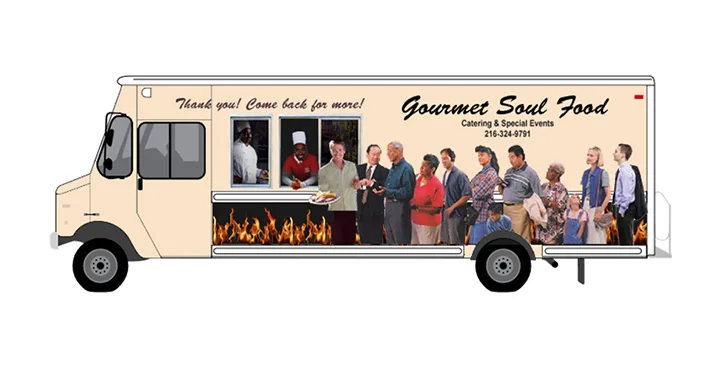
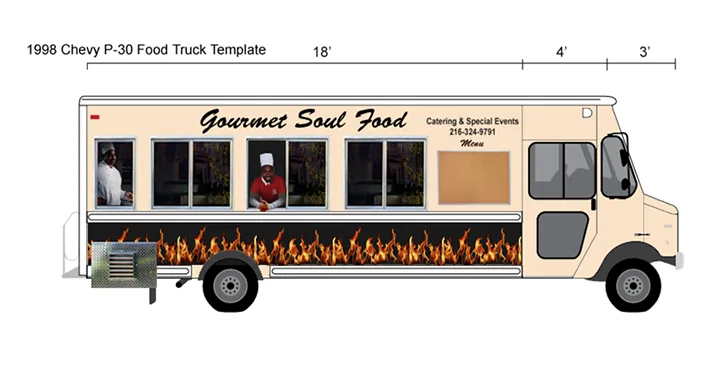
With this in mind, I visited the client and took pictures of the food truck in her driveway. It was an used truck that had been refitted for the new business. These type of trucks are not cheap, but the client worked hard, saved the money, and was very proud of her new acquisition. So after a nice friendly chat as I photographed, sketched and measured the truck, I bid her goodbye with the promise to call her back in a week or two. The results are the designs shown here for Gourmet Soul Food. It was catchy and had everything the client wanted.
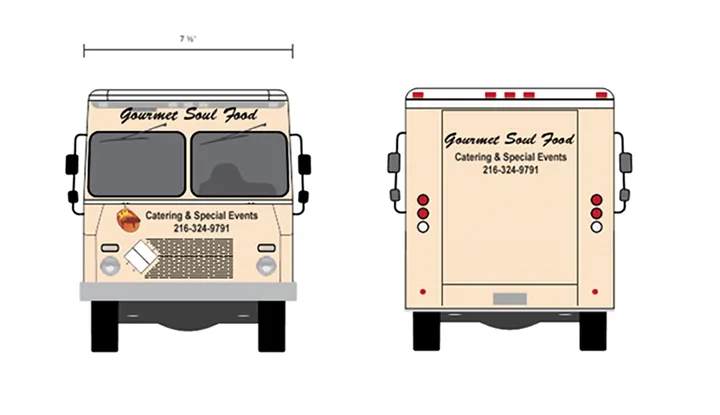
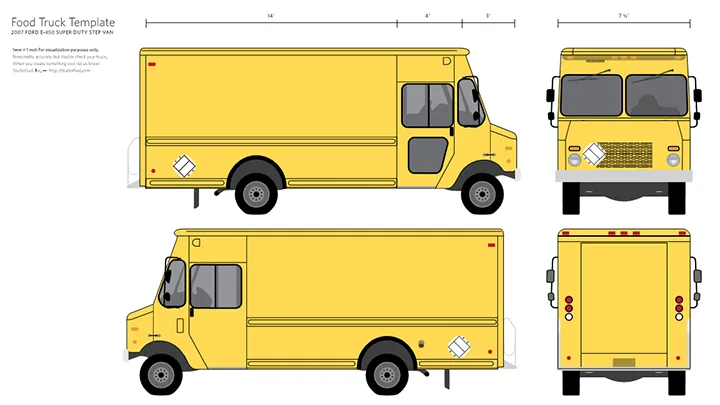
To produce the designs I used PhotoShop. I was able to find a diagram of the Ford F59 Utilimaster truck on-line, and then, using my measurement notes and photographs, made the necessary adjustments to produce blank plates of all the truck views. Then I did the design work over the blank plates. Once finished, I presented them to the client with suggestions on how to find a printer to produce a wrap -or have it painted by someone else. I never found out the outcome being too involved with my mural project. But I did enjoy the novelty of doing the design.
2016 - Athen's Food Truck
My wife Nancy, is Research and Development Chef at Athens Foods Inc, a family-owned business with the great distinction of being the world’s largest producer of phyllo dough and phyllo products. For those of you who have no idea what this is (don't feel bad, I didn't know either), Phyllo or Filo is a very thin unleavened dough used for making pastries such as baklava and börek in Middle Eastern and Balkan cuisines. My wife's job is to come up with ideas and recipes using the product. If you visit the Athens website, you will find some of her creations on the recipes page.
I get home one day and Nancy has one of her ideas . She wanted to introduce a couple of new creations during a presentation but the packaging that Athens was using looked dated. She reasoned that they would do good in general but also with Hispanic consumers. Considering that one of the largest buying segments in the US economy are Hispanics, and the fact that they buy more per family than anyone else, should have rung a bell in someone's marketing brain. So for Nancy this was chance to show another way of thinking with the packaging of this product. Naturally, having a Hispanic artist at home helps tremendously. So... she volunteered me to design a box.
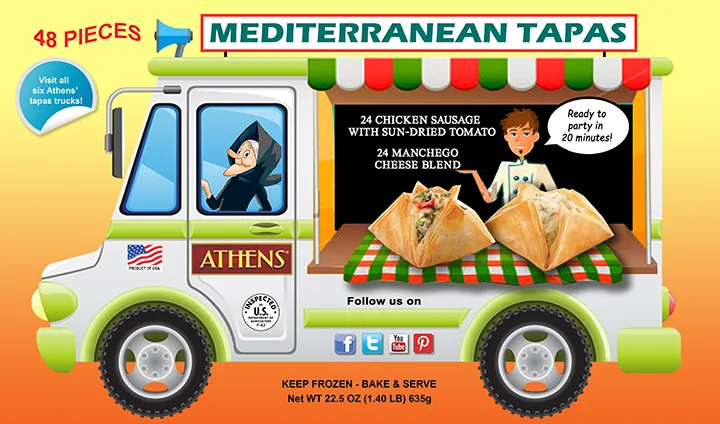
At this point I should point out that my lovely wife is a natural blond, and her way of thinking doesn't necessarily matches my pragmatic side. So I just sigh and got on with the job. The one thing about the Hispanic consumer is that they like color, sunny tropical colors. Also, they like cute and whimsical packaging -something with a little humor. And even more noticeable is the fact that, Hispanic women do the grocery shopping -with small children in tow! So the kids will grab anything appealing from the shelves and mom will lose that argument. Nancy gave me the starting point with the food truck because food trucks are a gourmet trend that seems to be getting stronger and stronger. And from there I did the rest. I must conclude by saying that her presentation raised eyebrows, but not much else. But as food truck designs go, I think this one was a winner.
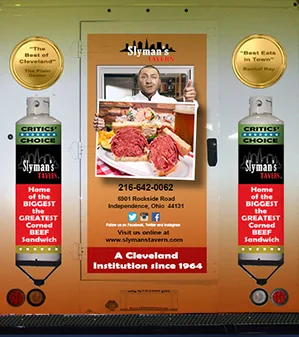
2016 - Slyman's Tavern Food Truck
Slyman's Tavern had opened it's first franchise store in Independence, Ohio, to a great reception, and a second store was in the planning stages (see links on the Restaurant and Sports Bar Design page). But in between, they wanted a food truck to help spread the brand and reach other markets. I was asked to do the design, but I did so with reservations. The reason was that I would rather come up with my own designs rather then illustrate other's ideas. But being already associated with the franchise, I attended a meeting and took some notes on everything they wanted to include in the design.
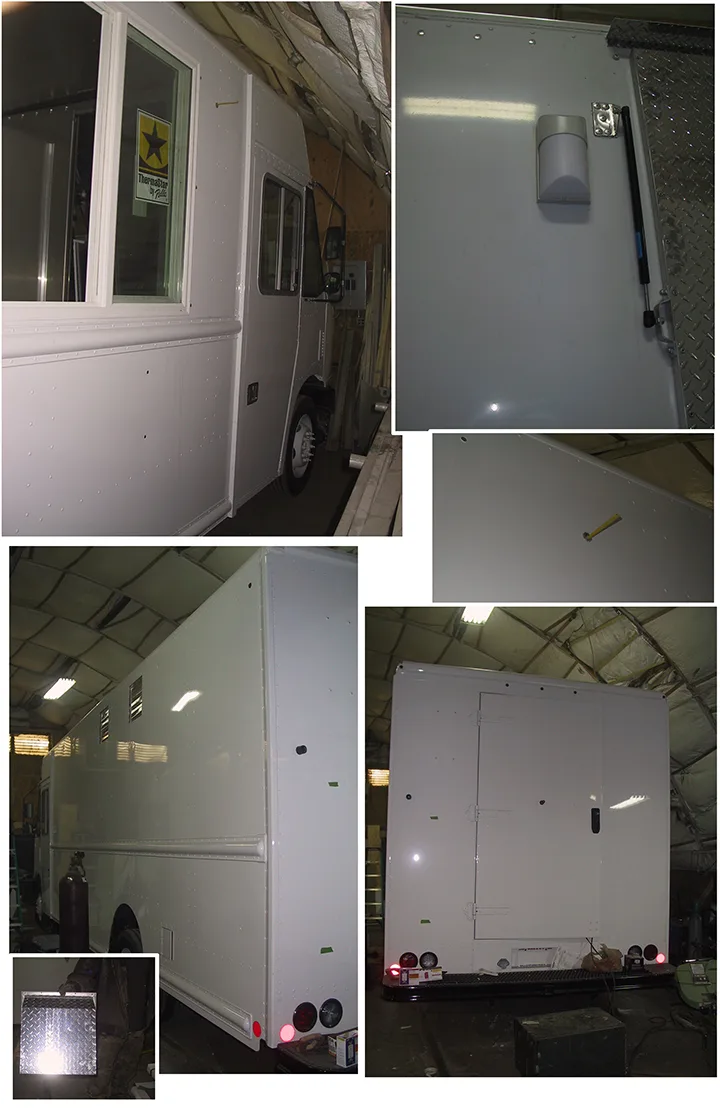
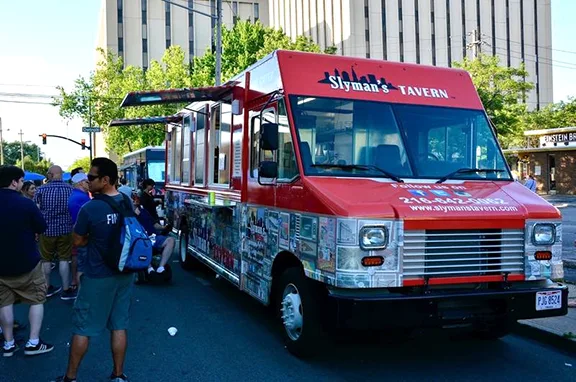
A new truck had been purchased and was being refitted. Being worked on in a tight space garage made photography almost impossible. So I ended up making a detail drawing and taking accurate measurements. My next step was to make clean plates of the truck using Photoshop. I made them to perfect scale since these plates were the blank canvas for me to design on, and to produce the necessary panels for printing. With a final design, a printing shop would take over, print out the life-size panels and apply the vinyl wrap to the truck. Since the final product was going to be printed, I created my files in a 32-bit, CMYK color mode, with a resolution of 300 pixels/inch or higher.
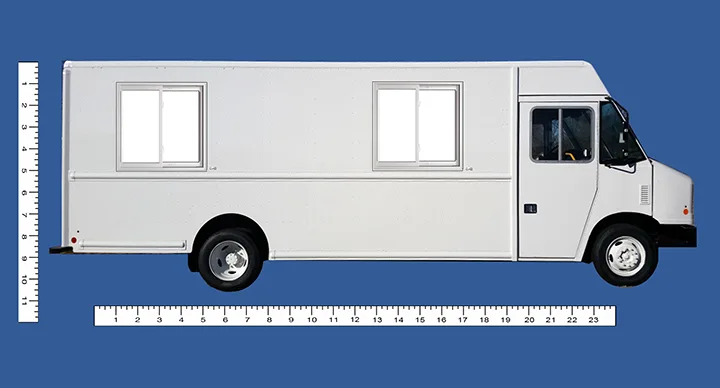
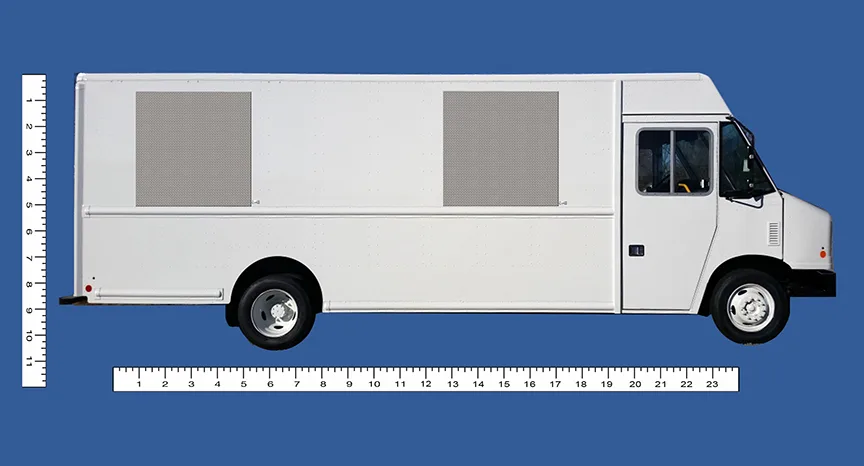
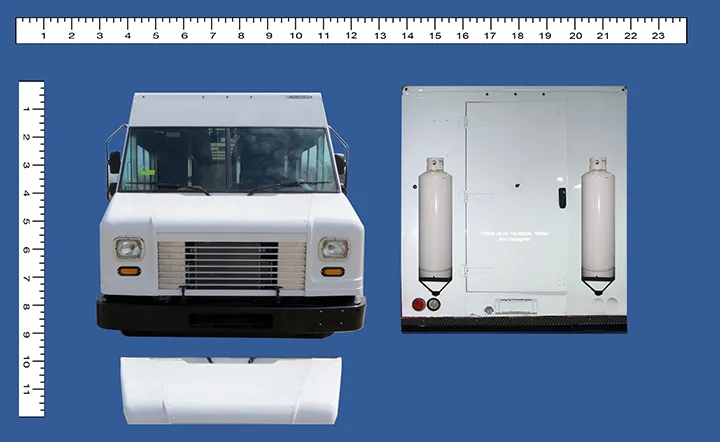
My first design included all the requested information and highlighted features. The windows had aluminum covers and a menu board bolted to the space between the windows. This design was actually a partial wrap, since only sections of the vehicle's body would be wrapped with the vinyl graphics, leaving sections of the original white paint finish uncovered.
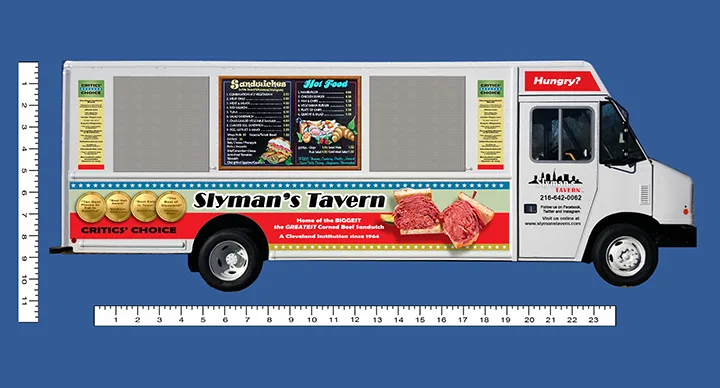
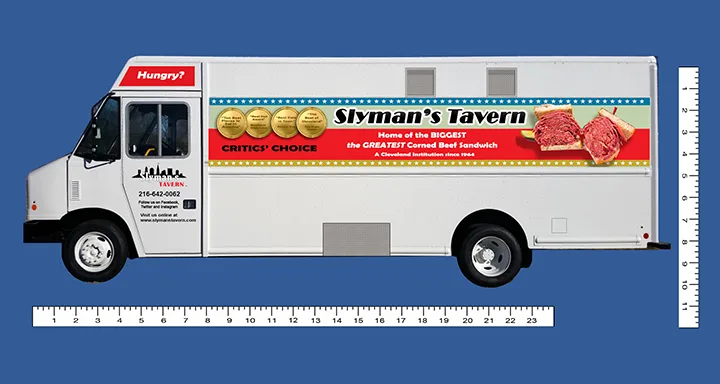
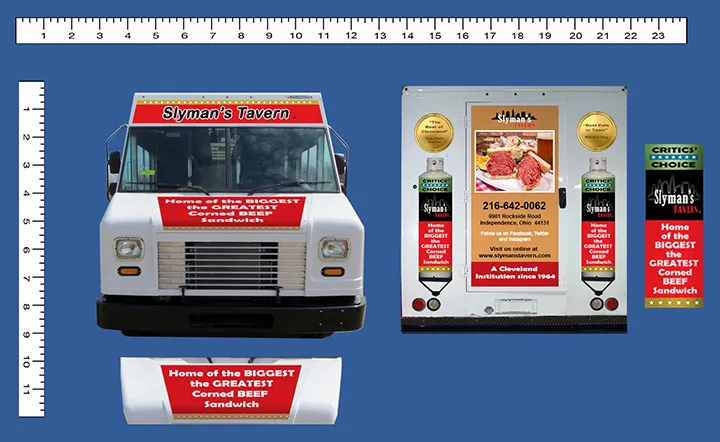
Now that we had a preliminary rendering, new ideas began to emerge. I was asked to include images of the three stooges referencing the iconic mural I had painted inside the restaurant. Another request was to make the Slyman's signature corned beef sandwich more prominent. The next design had all the revisions, and in addition, I turned it into a full wrap by adding a gradiation of color from yellow to orange giving the entire design a warm, unifying look. The Three Stooges graphic would go over the glass windows using perforated vinyl, which block the view from the outside into inside of the truck but allowed viewing from the inside out.
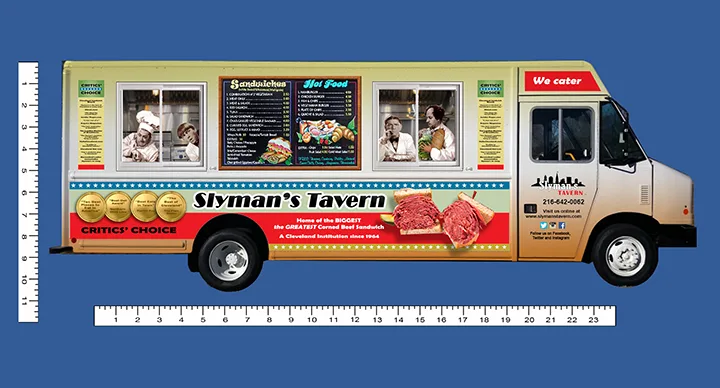
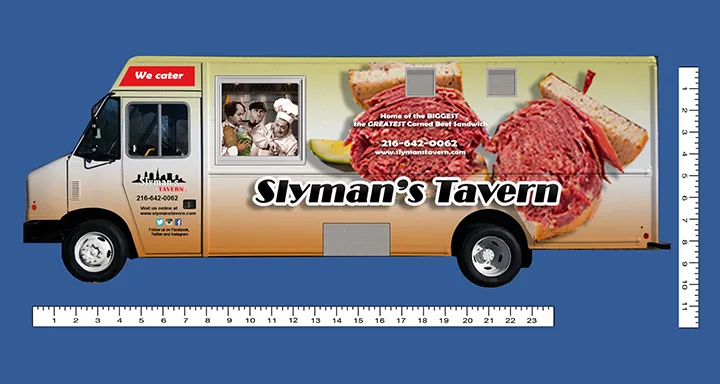
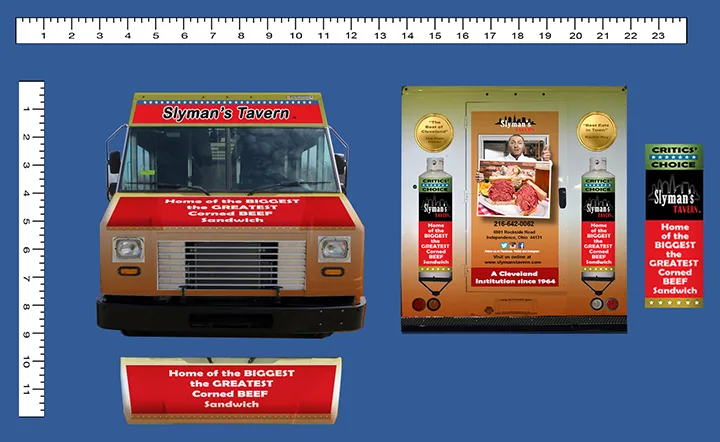
I felt we had a strong design but after a couple of weeks the design was completely scrapped and a new one was created. Three lamps were added to the exterior so the menu board became two individual pieces. The main background colors became red and white. Then, all the Three Stooges graphics were taken directly from the mural. And finally, the window metal covers were to be wrapped with images from the catering menu.
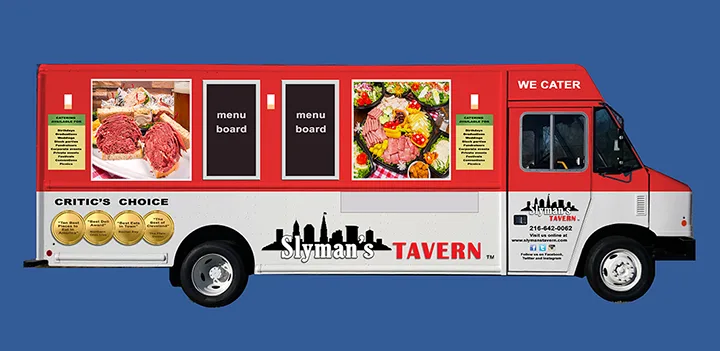
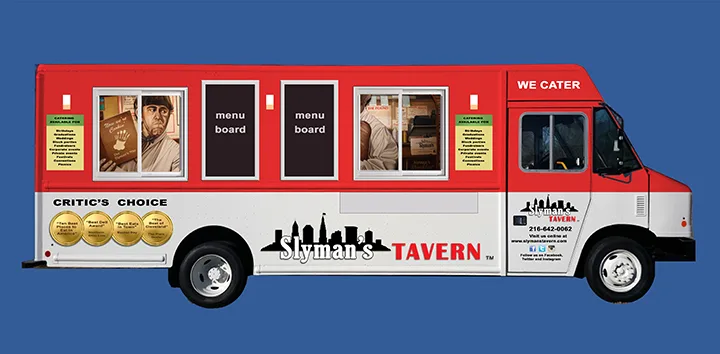
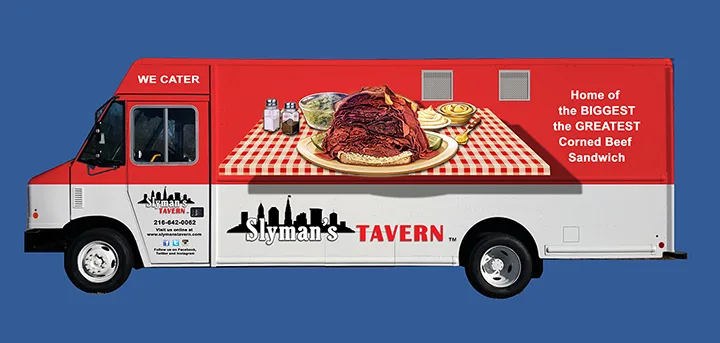
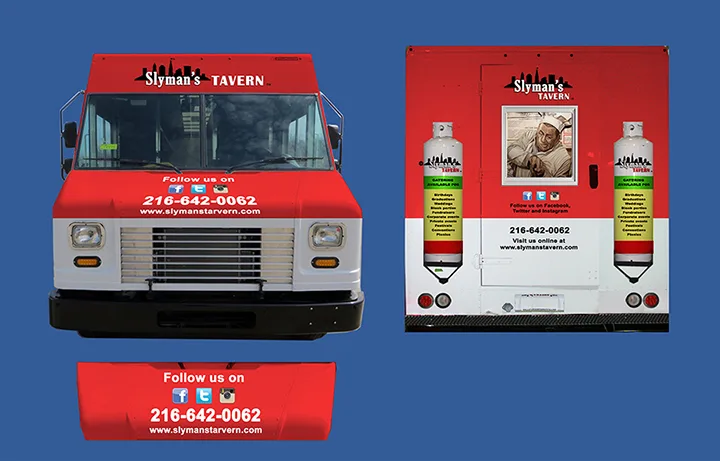
After some more discussion, it was concluded that the red and white color made the food truck look like an emergency vehicle at a distance. So I was asked to wrapped the bottom white portion of the truck with the "1964 mural" on display at Slyman's Tavern. This particular mural, designed by me to be seen upclose, is a busy collage of everything that happened in 1964, the year that "Slyman's Deli" opened for business. Wrapping it around the bottom presented a very obvious problem, which was: the lettering got lost in the busy composition. On the door, it became virtually invisible. To solve the problem I did a "fade" of the mural but this washed-up version did not look right. So in the end, I opted for an opacity gradiation from the back of the truck to the front, so by the time it reached the doors the faded background would make the lettering visible.
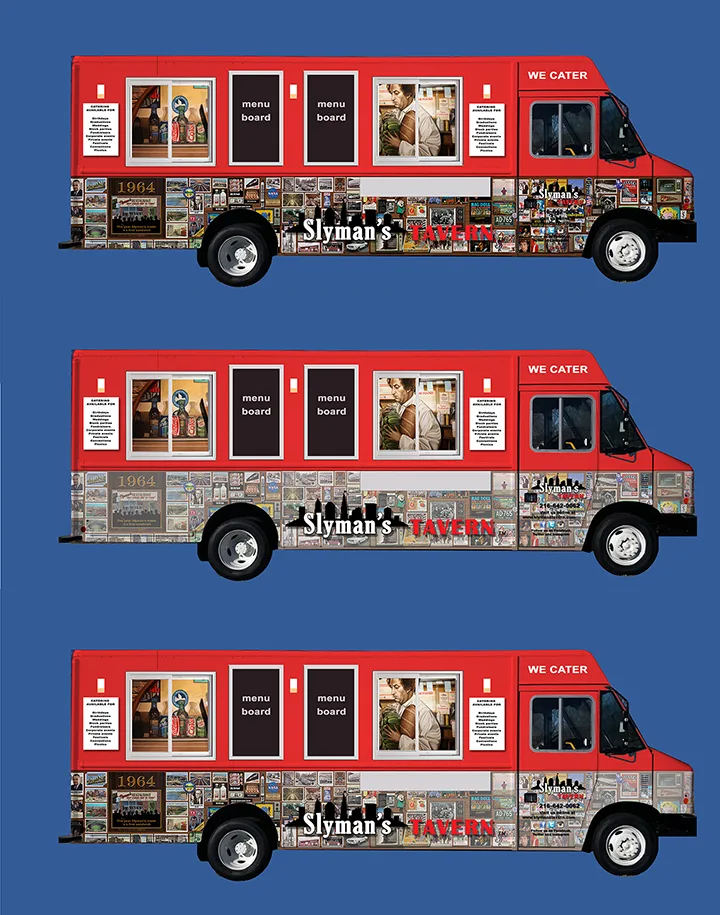
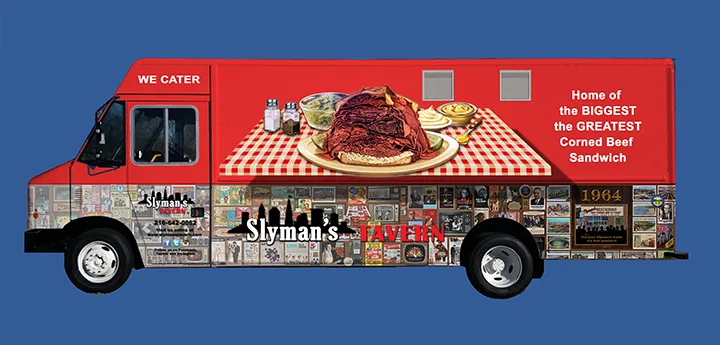
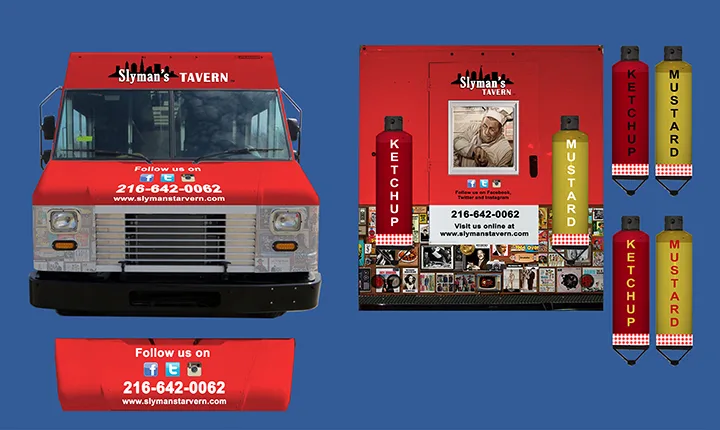
Once the design was finalized, the files were taken to a printing shop specializing in vehicle wraps. We had received three price quotes, one as high as two-thousand dollars above the lowest estimate. It goes without saying, we settled for the lowest bid (all of the printers basically used the same large format printers so I was not concern with printing quality). After we settled on a printing shop, I stopped by to go over the design panels with their graphic artist. Once he formatted the designs for printing the panel on vinyl film, a date was scheduled to do the wrap. On that day, the truck was washed and then driven into the printer's covered garage. The wrap was done the next day.
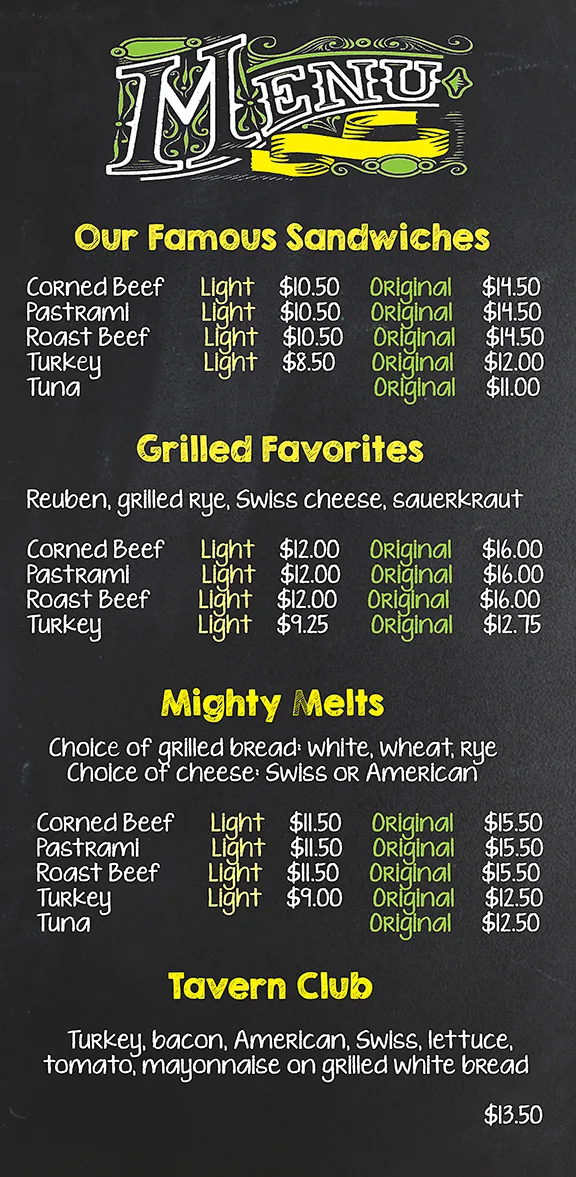
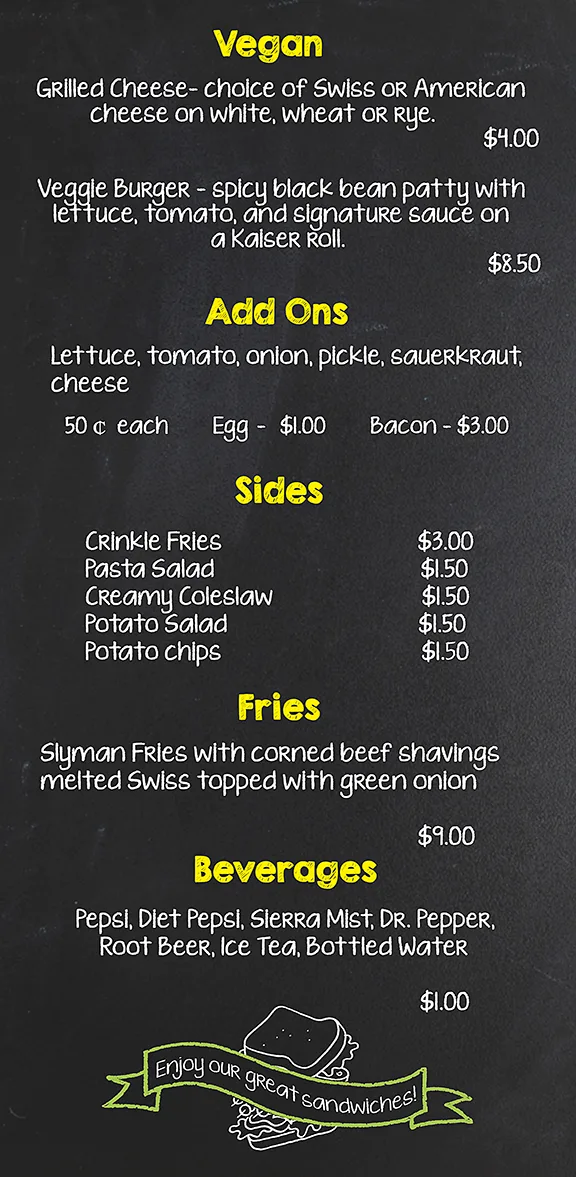
The last element needed to complete this job was the menu boards. We wanted them to look like they had been written with chalk on a blackboard. So I designed them in Photoshop and had them printed on magnetized vinyl. But since the sides of the truck are made of aluminum -were magnets don't work, we build two framed panels in my shop and lined them with sheet metal. These panels were then bolted to the truck and then the magnetized menus were attached. Why not do permanent menu boards as part of the wrap? Because of price and menu changes. So the magnetized "chalk boards" seem the right solution. And with this final piece of business taken care of, I moved on to the next job.
2017 - The Barflyy Food Truck
This next job was a twist on the food truck concept. The idea was to take a food truck and place it inside a restaurant with an inner city street theme, so customers could order food from the truck. Yep, you read it right. So in this entry the focus will not be on the type of art used to decorated the truck, but on how the truck would operate in this unique setup. You can say that the client had a brainstorm, and it was up to me to visualize it. That's what conceptual designers do. At the time, I was as intrigued as you probably are now.
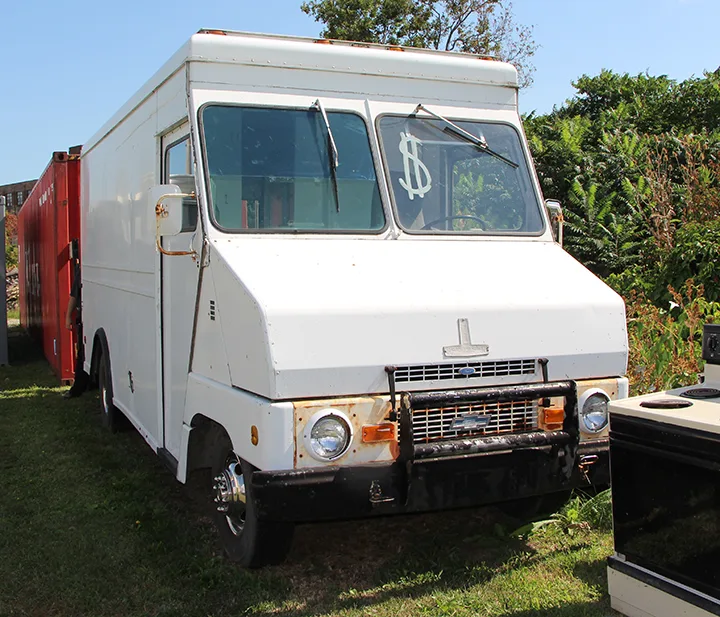
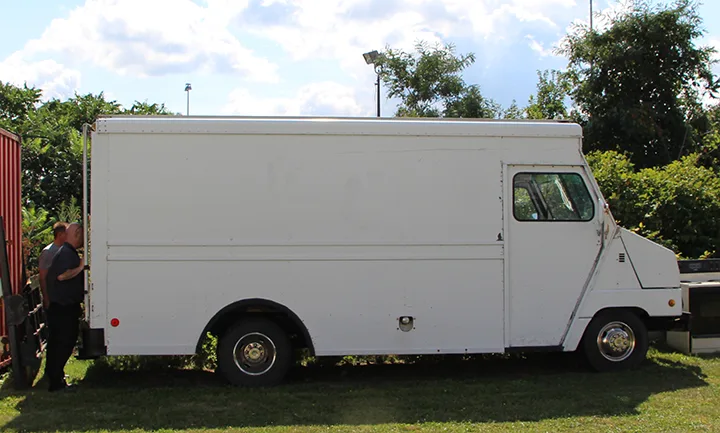
The refitting shop were the Slyman's food truck was done had a smaller truck that was basically used as a source of spare parts. But aside from the fact that it would be too expensive to have it fixed and drive again, the body was in remarkably good shape. So my client negotiated a deal to buy it and take it from Cleveland to Kent where the idea for a new restaurant (or dance-bar) was taking shape. The logistics of doing so were actually quite complicated. But after having a half-ton galleon shipped from Vegas to Cleveland, reconstructing it then and hanging it up thirty feet in the air, by comparison, this was basically child's play (See the Tilted Kilt Downtown Galleon Reconstruction link in the Restaurant and Sports Bar Design page).
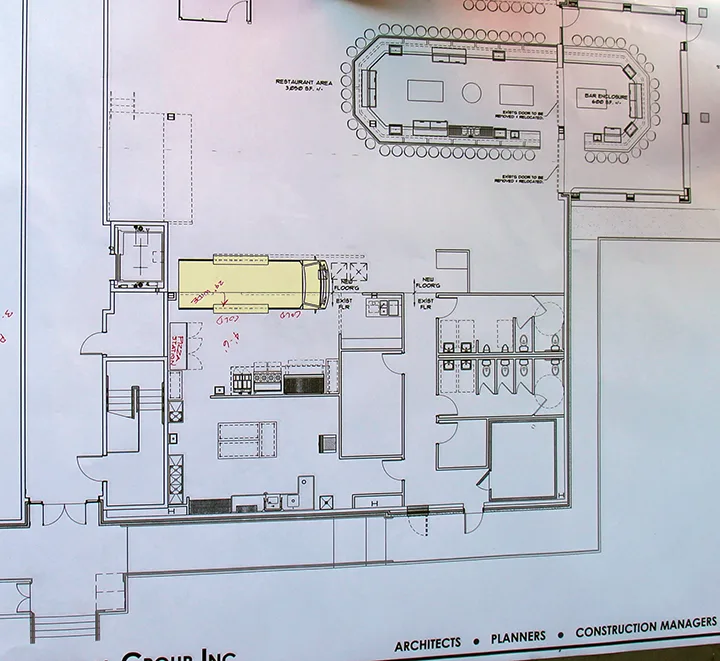
The plan was to cook the food in the back kitchen, assemble the orders in tables behind the side of the truck, pass along the finished dish to servers inside the truck who would then complete the order and pass it out to waiting costumers. It sounds complicated but that's pretty much the way restaurants work. The gimmick was that it would appear like the food that came out of the truck was done in the truck. I does sound like the premise for a screwball comedy, but you have to admit that the concept was way cool. On the other side of "the street", people would order and get their meals.
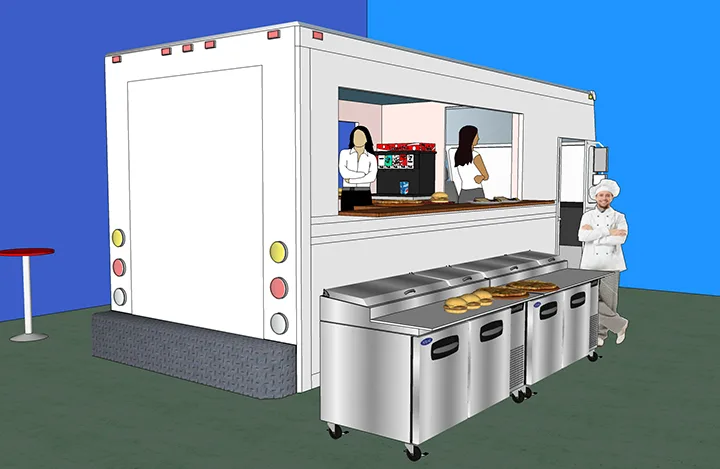
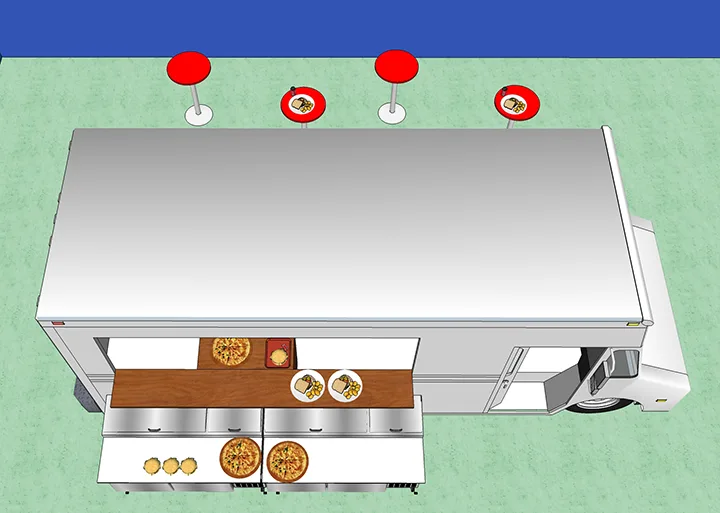
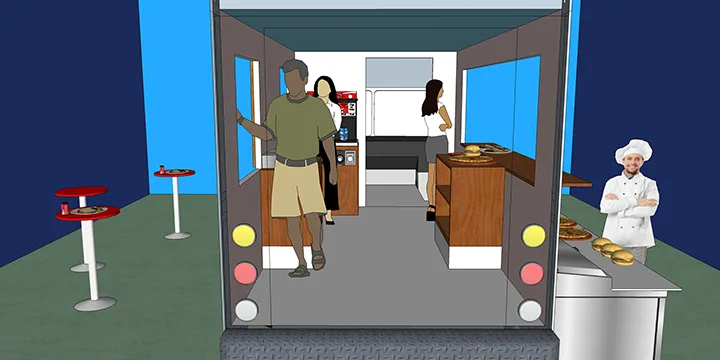
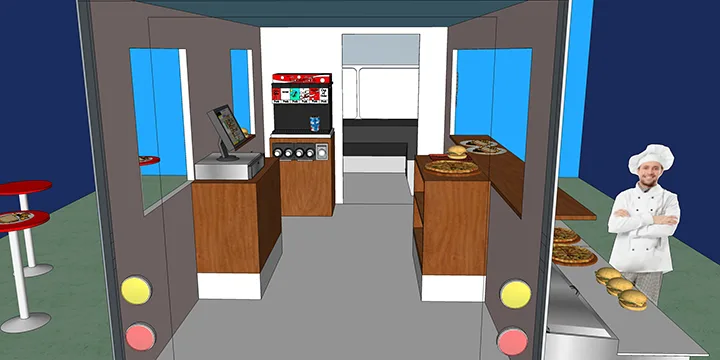
Eventually the truck would have a name and some catchy street art decor, and the dinning area would look like a street, with hanging string lights turning on at night when the music and the dancing started for one hell of a party. Think Miami, or L.A., or El Condado in San Juan and you get the picture. I created a 3D design in Sketchup without over-detailing anything. But it effectively illustrated the concept and space demands to carry out the operation of the kitchen. Conceptual renderings are an indispensable tool for visualizing ideas and studying solutions before money and time is wasted. In the end, this concept was not realized as another concept took hold, and in 2018, that space in Kent became The Barflyy Retro-Bar & Arcade (again, see the link in the Restaurant and Sports Bar Design page to read about it).
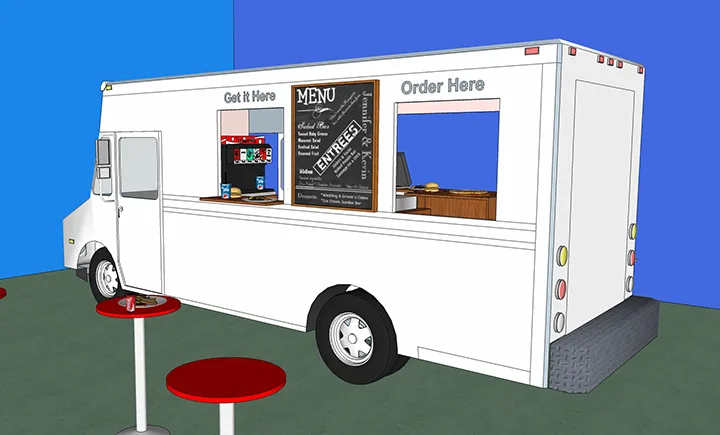
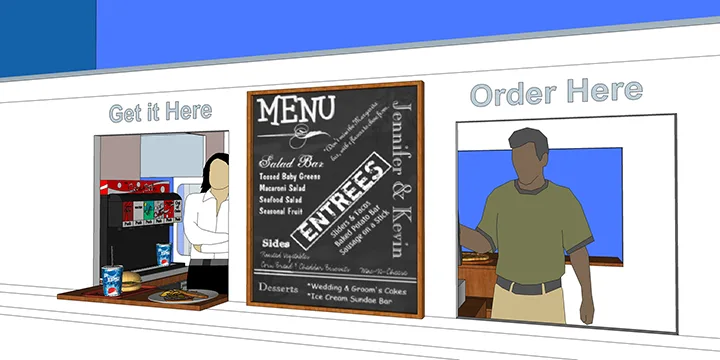
All in all, designing from the comfort of your home computer is not a bad way to make a living. And, at the very least, this project was a good exercise in thinking out of the box. One thing you need to understand is that the clients have ideas but they don't seem to have practical clues on how to get there. So while you are designing, you are also figuring out how to do things in a real situation. Things like: Will the floor hold the weight of the truck, and if not, what can we do about it? Or, What is the best arrangement for a drink station and storage cabinets so three servers can operate in the back of the truck?
There is no roadmap. You are creating things that do not exist and most of the time you are starting with nothing. You have to solve unforseen problems and it may take you several attempts and dead ends until you get it right. And finally, to top it all of, you need to be resilient and patient. Because after spending days and nights to turn those ideas into renderings, the client can take a quick glance at those hard-won images, and say: "-I changed my mind; forget about it." Welcome to my world.
2018 - Just Natural Provisions Truck
The final entry in this page is an easy one. It is a story that happens to me quite frequently. Once again I was working the mural at West 25th and Clark Avenue restoring damaged areas (see the It's Up to Us mural restoration link in the Murals page), when a gentleman stopped by and gave me his business card. He owned a poultry wholeseller business and needed art done on a new truck. I told him I would contact him after I had finished my current project. Three weeks later I gave him a call and we scheduled a meeting for me to take a look at the truck. In fact, he had a small fleet of distribution trucks with his business logo and phone number hand painted on all of them -except for the new truck.
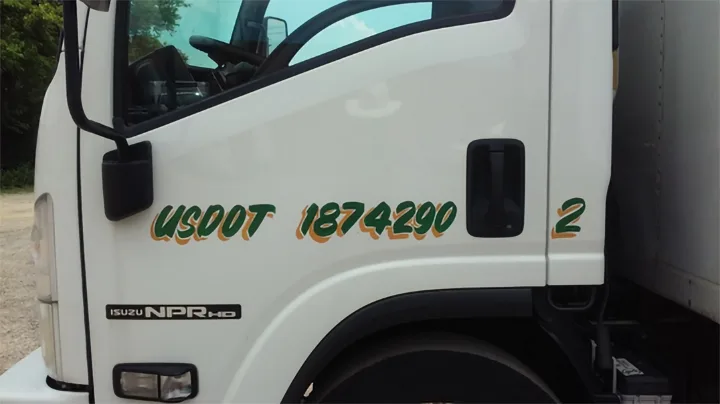
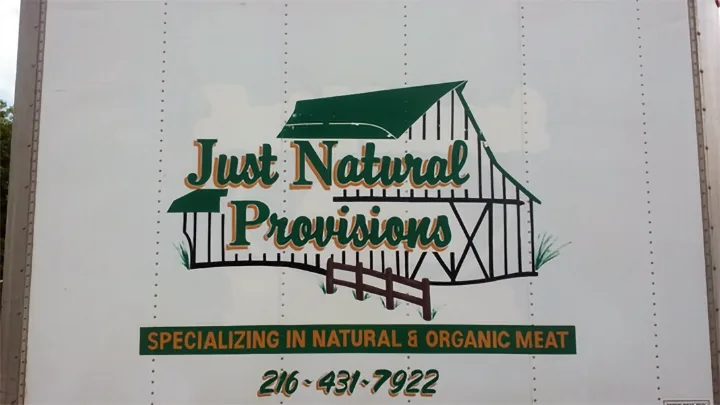
After exchanging pleasantries, he asked for an estimate on reproducing the logo on both sides and the back of his new truck. The sign painter who originally did art was not around anymore and he could not find another sign painter. He also mentioned that he might need other trucks done too. I have hand-painted lettering and logos on trucks in my younger days, but I have to confess that I never really enjoyed the work. Still, I wanted to help the nice gentleman with his request. So I took a few photos and told him I would contact him later with an estimate.
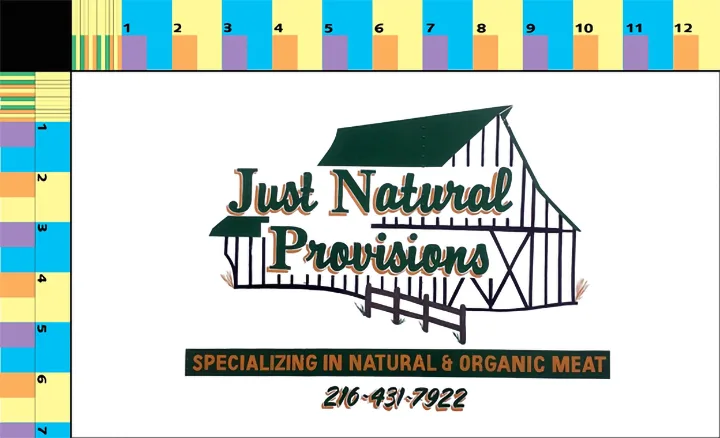
At home I cleaned up the photo of the logo in photoshop, and reproduced an overlaid rendering ending up with a high resolution file. Then I searched for an image of the same truck and added the finished art to its side. From here on, if I where to hand paint the logo on other trucks, I could use my rendering to create a scaled-up paper pattern which I would then transfer to the side of the truck. With the drawing in place the painting is just tedious work. However, I did not relish the process of painting multiple versions of it.
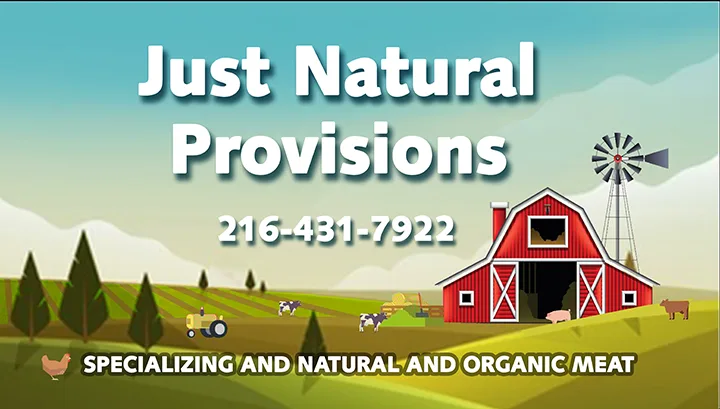
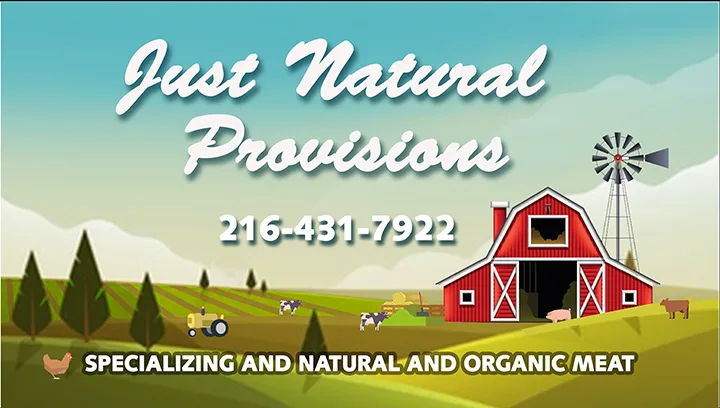
As I sat in front of my computer and worked out some numbers, I reached the conclusion that doing a hand-painted job would cost almost as much as doing vinyl lettering. And, in the long run, it would be cheaper. What's more, the original logo and lettering were outdated and not very attractive -as in eye-catching attractive. So I created a new color image for the truck that better conveyed the essence of his business, and could be printed as a partial wrap. For comparison, I added the new color design on a truck for the client to see. Then I sent low resolution copies of the images to the printer that had done the Slyman's Food Truck to get estimates of doing the job both ways, one with the original logo and one with the new color art.
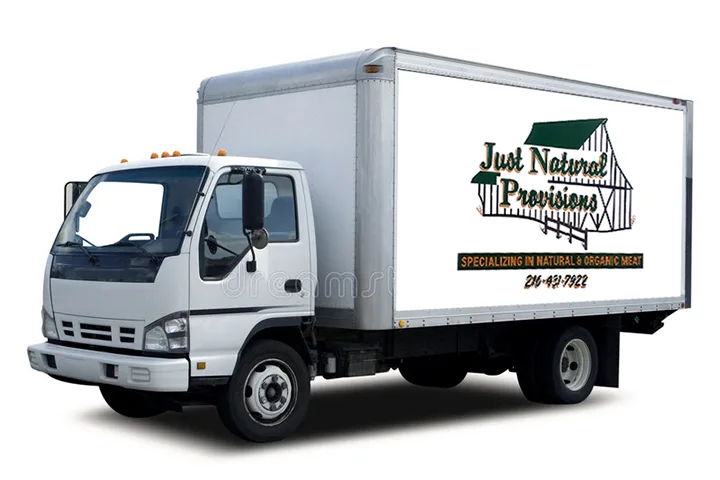
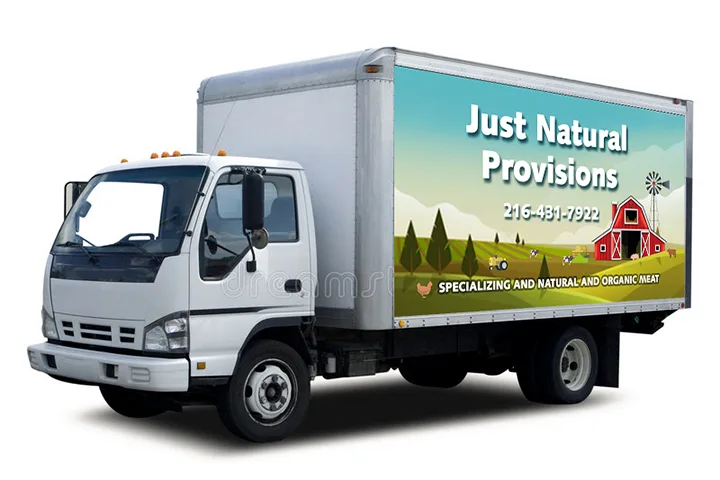
Days later I received the estimate via email and discovered there was not much difference in pricing from the original logo to the new design. The price was reasonable though not cheap, but neither was painting it by hand. But still, upgrading to the new art seem like moving from night to day. Next, I prepared a letter explaining to the gentleman the two options, the advantages of going vinyl, attached the estimate, and wish him the best. But I also mentioned that if he wanted to move forward with the project, I would be available to do the high resolution design for printing. All this happened in July of 2018. I never heard back from him until January of 2019, when he left a message on my phone recorder asking me to resend the estimate that he had lost. And so, I did send him another copy. He may still be thinking about it; you never know.