
Street Sense
In May of 1991, the Cleveland Public Theater (CPT) was premiering a new opera by New York writer Migdalia Cruz. The project was being produced by the theatre's maverick Artistic Director and founder, Mr. James Levin. With Linda Eisenstein providing the musical score and Steven Pickover directing, Street Sense was an ambitious and prestigious undertaking.
Both its author and the opera's setting dealt with the Hispanic community in New York city, so James wanted to hire a Hispanic artist that could capture the lyrical vibrancy of the work in visual form. Rumours about John's artistic prowess had been circulating in the city's tight art community and James extended him an invitation to work on the set design.
Since his arrival to Cleveland, John had limited his theatrical ambitions to religious plays in the tight Spanish-language church circuit. He had spent the last twelve years perfecting his English and working primarily as a freelance artist to support his young family. The completion of his first public artwork in 1987 -"Mural history of the Puerto Rican people" had placed him on the public spotlight. But he wanted to make a transition to projects that would not be stereotyped primarily as "Hispanic" in order to broaden his artistic portfolio. When James Levin came calling, he was ready.
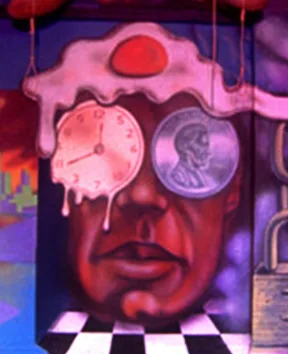
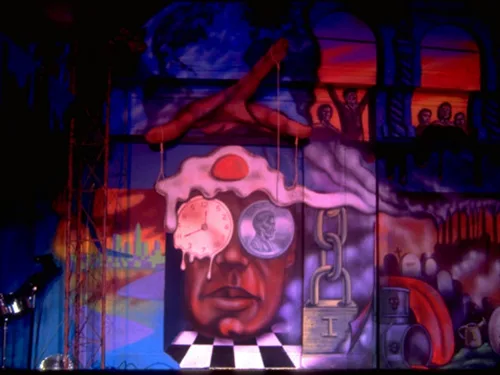
John's designs amazed everyone. The sheer visual power of his imagery was stunning. Drawing from the dark, mystical and surreal world of the play, he emulated the pictorial style of Salvador Dali -the master of surrealist painting, to create a visual representation of the major themes in the play. In due course he alone painted the entire set mural in a space of three weeks. His design included objects bursting out of the mural in 3D. These were built out of paper mâché by a sculptor working from John's drawings and then attached unto the mural walls. Notice the fingers of a hand extending forward with hangman's nooses hanging from each finger (later to be enlivened by an actor).
During performances the visual effect of the set mural was further intensified by Dennis Dugan's stage lighting design and floors covered in artificial fog. In one of the opera's most imaginative scenes, a section of the mural, which had been painted on scrim cloth, was rendered invisible thus revealing another background scene in which an eight foot hand eerily rose from the floor. All the years of independently producing theatre in Puerto Rico without restrictions had made John an accomplished designer and it showed.
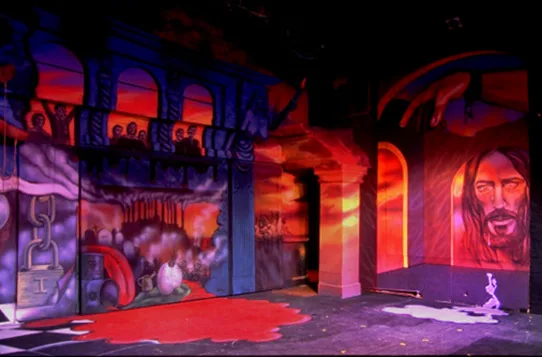
With the presentation of Street Sense the Cleveland Public Theatre lived up to its reputation of being one of the country's foremost experimental theatres. The opera opened to mixed critical reviews and controversy, especially among Hispanic audience members who disapproved of the darker tones in which their community was portrayed. But John's murals were singled out for praise in the printed media and they established his reputation as a top muralist in the city. It was also noted that many people who did not enjoy the opera attended several performances just to admire the sets.
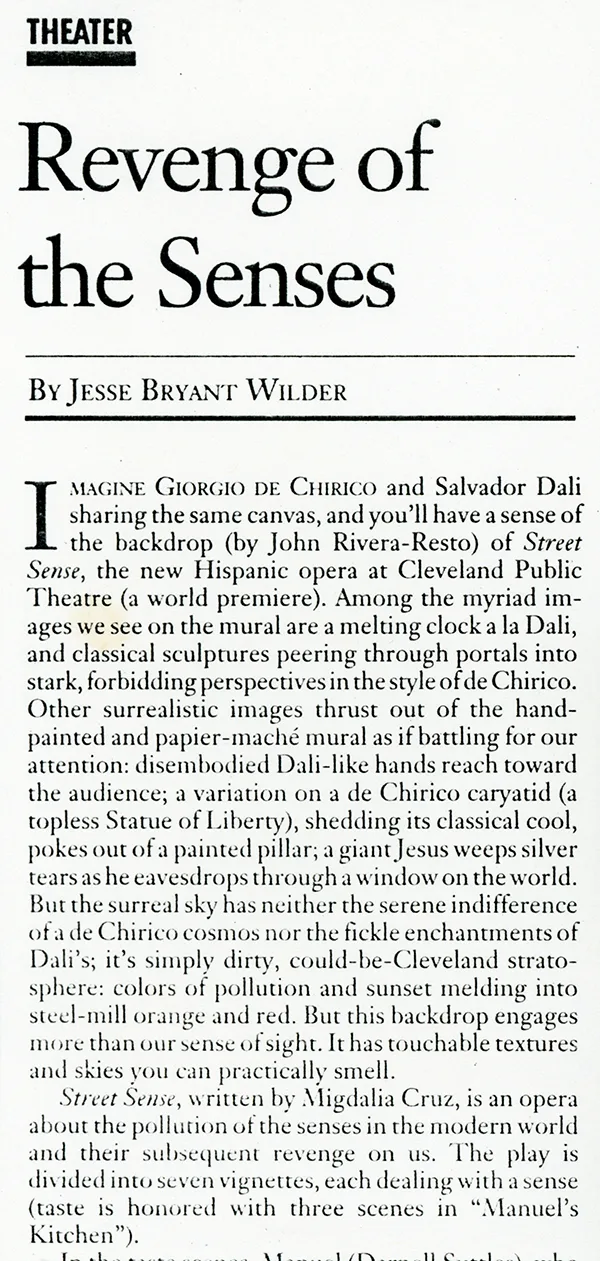
John's imagery greatly supplemented the undertones of the story. He had sweat, blood and tears literally "pouring" unto the stage. His use of a "Jesus" image received much notice by the audience and was reproduced several times in media articles. John even had a request to paint another one for a client, but being already bored with the work, he politely refused. To complete the murals (and construct the sets) in a short three-week deadline, John used cardboard and cloth as extensions to the theatre's hard plaster walls. To execute the murals he used a combination of artist's acrylic paints with regular "house" latex paints, which he applied with brushes, rollers and a spray gun.
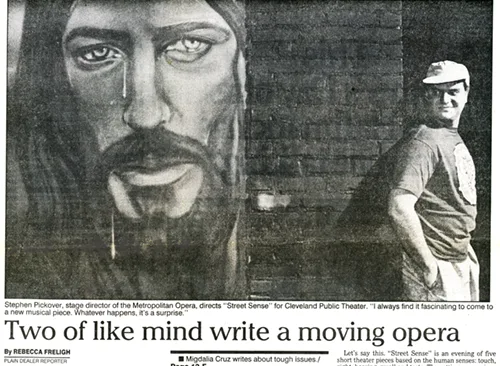
After the completion of the opera's stage run, the murals were painted over to make way for the next set in the theatre's line-up. These pictures of the Street Sense set murals shown here on this website are the only visual record of the work. This is fortunate since no other record of most of John's early work or the opera survived. However, the limited longevity of his works never seem to bother him. He even advised young artists to -"Never fall in love with your work. Just let it go and move on."